Pranav Rajpurkar
I want everyone to have access to expert medical care. I am working to build AI doctors that can make this possible.
Associate Professor of Biomedical Informatics, Harvard Medical School. Co-founder, a2z Radiology AI.
The work toward it
I think of the path in four parts. For each, one result we have shown and one question that is still open. The research happens in the Rajpurkar Lab at Harvard.
-
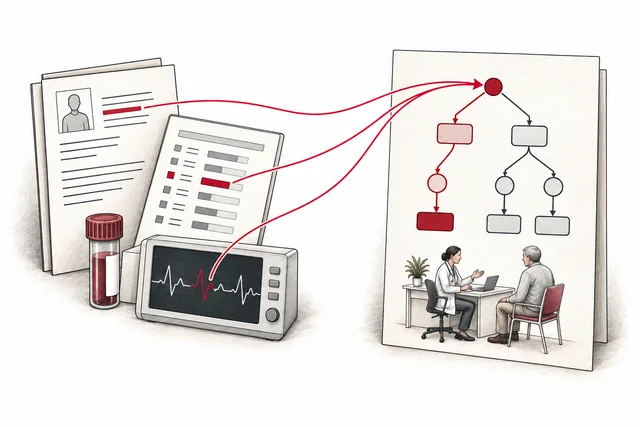
Reason from evidence
An AI doctor has to read everything a patient has, from scans to notes, and tie each answer to the evidence behind it.
- Shown
- Radiologists rated reports from MedVersa, our generalist imaging model, as good as human-written ones in 64% of cases. NEJM AI, 2026
- Open
- How should a model combine a patient’s scans, notes, labs, and history into one picture that changes over time?
-
Test before we trust
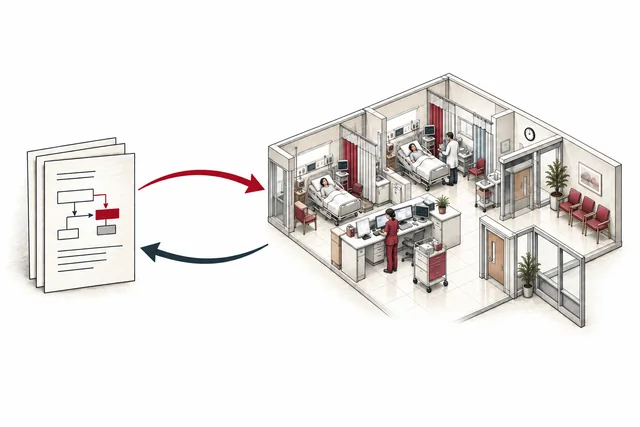
Exams and fixed benchmarks overstate readiness. Before an AI meets a patient, it has to be tested the way it will be used: across hospitals, in conversation, and alongside clinicians.
- Shown
- GPT-4’s diagnostic accuracy fell from 82% on written cases to 63% when it had to take the history itself. Nature Medicine, 2025
- Open
- How can a simulated hospital respond plausibly to an AI’s decisions over time?
-
Learn to assist
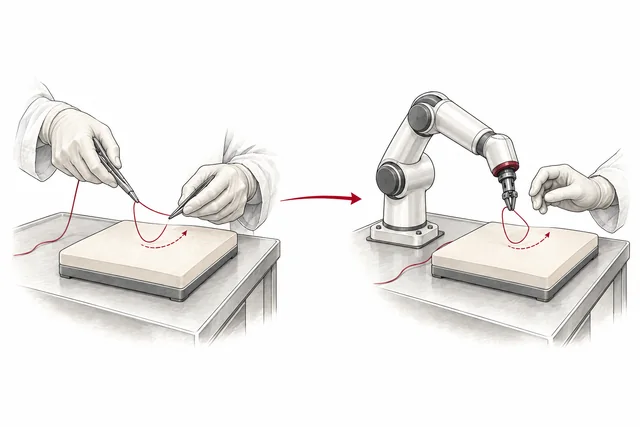
Much of care is physical work. I want robots that learn from expert demonstration and keep the clinician in control.
- Shown
- Trained on under an hour of demonstrations, a low-cost robot arm followed 23 of 25 stitches alongside a surgeon. Machine Learning for Healthcare, 2026
- Open
- Which forms of robotic assistance are useful, safe, and robust enough to evaluate clinically?
-
Reach patients
Research only helps patients once it reaches the clinic. I co-founded a2z Radiology AI to take this work there.
- Shown
- a2z’s two FDA-cleared devices, a2z-Abdo-Triage and a2z-Unified-Triage, flag suspected cases across 17 findings on adult abdomen and pelvis CT for worklist prioritization. a2z-Abdo-Triage clearance · a2z-Unified-Triage clearance
- Open
- What evidence should let AI take on more responsibility in care?
-
Expert medical care for everyone.
Writing
-
Expert Medical Care for Everyone
What an AI doctor would have to do, what the current evidence supports, and which questions are still open.
August 2026 -
The Robot Doctor Will See You Now
An opinion essay with Eric Topol on AI doctors.
The New York Times · Opinion · February 2025 -
Learning to Execute
Learning to read code, write every day, cut losses, and build the infrastructure that made the first research projects possible.
The First Decade of Research, part 1 · December 2025 -
Recognizing Good Problems
How reading, mentors, timing, and repeated exposure helped me develop better judgment about which problems were worth pursuing.
The First Decade of Research, part 2 · December 2025 -
Making People Care
What I learned about framing a problem, writing clearly, and showing why a piece of research matters.
The First Decade of Research, part 3 · December 2025
Background
I started in language AI at Stanford, where my coauthors and I built SQuAD, a question-answering benchmark that received a 2026 ACL Test-of-Time Paper Award. I then turned to medicine, with deep learning for arrhythmias and chest X-rays (CheXNet, CheXpert). I received my BS, MS, and PhD in computer science at Stanford.
I am an Associate Professor of Biomedical Informatics at Harvard Medical School, with 201 research publications. My course AI for Medical Diagnosis, part of the AI for Medicine series, has 90,000+ learners. Recognition includes MIT Technology Review’s Innovators Under 35 and Forbes 30 Under 30 in Science. A biography and headshot for organizers are on the bio page.
Working with me
- PhD applicants
- I advise PhD students through the AI in Medicine PhD track at Harvard Medical School. Apply through the program and list me as your first preference; I can't consider admissions by email.
- Before a PhD
- The lab's predoctoral researcher role and the Medical AI Bootcamp both take structured applications on the lab site.
- Admitted at Harvard or MIT
- Reach out right away. Rotations with my lab are welcome, and so are conversations about doing your PhD with me.
Elsewhere
Connect
Research & Profiles
- Google Scholar Complete publication list and citation metrics
Teaching & Courses
Past Projects
- Harvard CS197: AI Research Experiences Course Instructor (2023-2024)
Press & News
- New York Times: Opinion on AI Doctors 2025
- Wall Street Journal: AI in Medicine
- Washington Post: AI and Radiology Software 2025
- Financial Times: AI in Healthcare
- HMS: Can Jack-of-All-Trades AI Reshape Medicine
- HMS: Does AI Help or Hurt Human Radiologists?
- HMS: How Good is AI-Penned Radiology Report
- HMS: How Good are AI Clinicians at Medical Conversations
- HMS: No Labels, No Problem
- HMS: The Year in Harvard Medical School Science
- Harvard Medicine Magazine: 5 Questions for Medical AI Expert
- Stanford Medicine: AI Outperformed Radiologists in Screening X-rays 2018
- Stanford News: AI Tool Helps Radiologists Detect Brain Aneurysms 2019
- Stanford News: Advances in Generalizable Medical AI 2023
- Stanford News: Algorithm Diagnoses Heart Arrhythmias with Cardiologist-Level Accuracy 2017
- STAT News: Building Trust with Doctors in AI Medical Image Analysis 2022
- Endpoints News: Generative AI Meets the FDA
- Healthcare Brew: OpenAI's Claims About Transforming Healthcare 2025
- Becker's Hospital Review: AI Models Fall Short in Clinical Conversations
- Radiology Business: AI Impacts Radiologists Differently
- HealthTech Magazine: 30 Healthcare IT Influencers Worth Following 2024
- HealthIT Analytics: Self-Supervised AI to Detect Disease via X-ray
- Health Imaging: Accurate AI-Generated Radiology Reports
- MIT Technology Review: Self-Supervised Learning for Medical AI 2022
- MIT Technology Review: Profile - Innovator
- VentureBeat: How Self-Supervised Learning May Boost Medical AI
- Wired: AI Beat Humans at Reading, Maybe Not
- The Verge: AI Reading Comprehension 2018
- Engadget: Stanford Algorithm for Arrhythmia Detection 2017
- New Scientist: AI Chatbots Fail to Diagnose Patients
Podcasts & Media
- The Economist: How AI Will Change Healthcare 2024
- a16z Podcast: Generalist Medical AI
- NEJM AI Podcast: AI and Radiology
- The AI Health Podcast
- RSNA Radiology Podcast
- Vice: This Algorithm Reads X-rays Better Than Doctors Do
- CBS News Feature
- NPR Health Shots: Self-Taught Computer Diagnosis 2019
- YouTube: Stanford Research Talk
- YouTube: AI in Medical Imaging
- YouTube: Medical AI Discussion
- YouTube: AI and Healthcare